8 Ways to Promote Planned Gifts

The Time to Build a Planned Giving Program is Now
More than 7 in 10 nonprofit leaders worry about their organization’s financial stability, according to a recent study by the Center for Effective Philanthropy. And nearly half fear their nonprofit will need to close or merge.
I know how tough it is out there with funding cuts and increased community need. You see, much of my nonprofit career was spent at organizations that relied on funding from the now-defunct U.S. Agency for International Development. (My LinkedIn feed is full of former colleagues still searching for a stable to place to land.)
These nonprofits always struggled to build strong individual giving programs. Sure, they could host a gala with a U.S. senator as the keynote. But consistently steward individual donors in the communication channels they prefer? Not a chance.
I’m proud that Abeja has helped so many nonprofits achieve that consistency over the last decade. That’s essential. Now I want to encourage you to take the next step toward sustainability and build a real planned giving program.
Get the Step-by-Step Guide
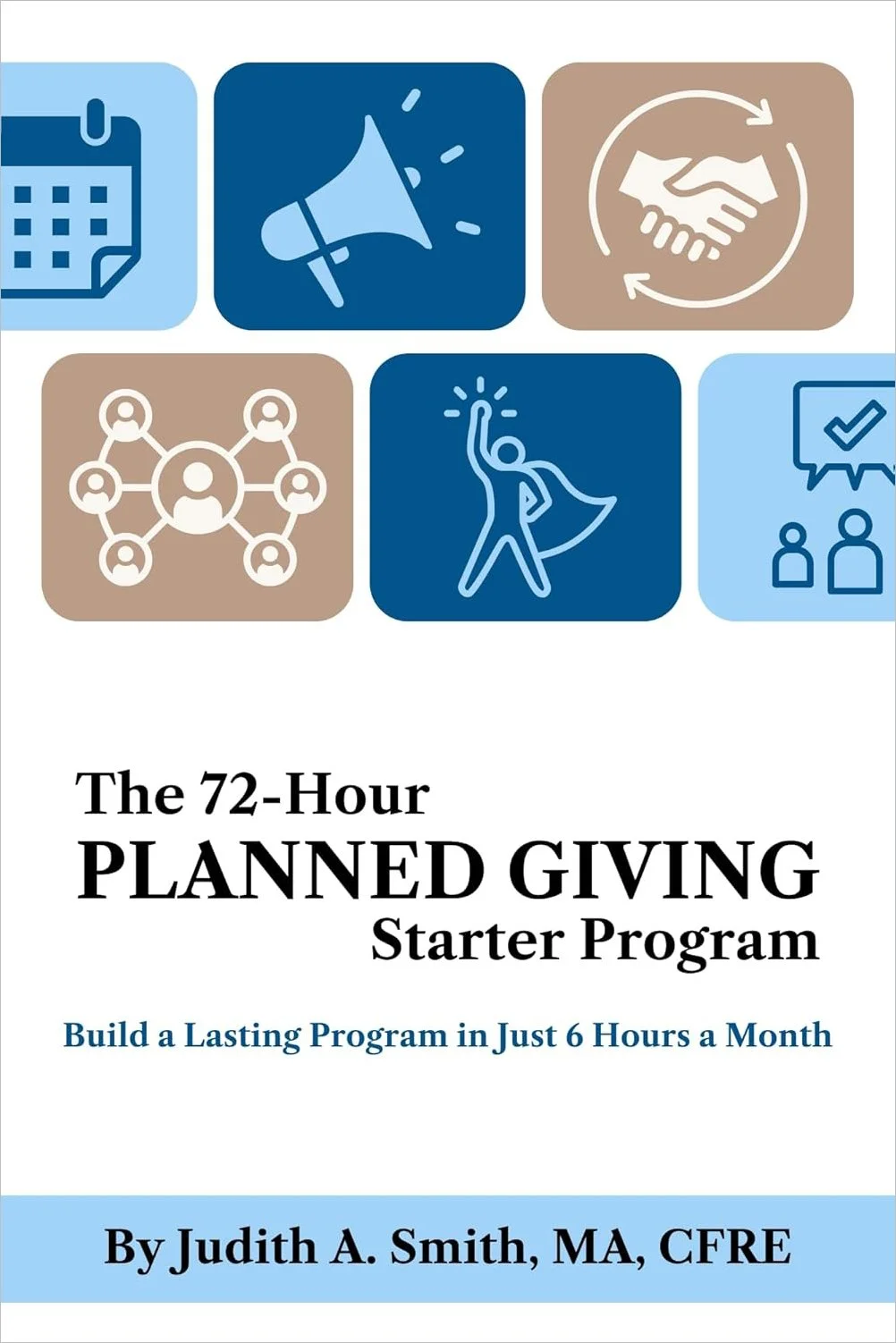
This short, gem of a book sold out at the 2026 AFP ICON Conference.
And for good reason ...
Pick up a copy of The 72-Hour Planned Giving Starter Program, by Judith A. Smith, MA, CFRE. Her book lays out a month-by-month checklist of the tasks that must be done in the first year of a successful planned giving program. All you need is six hours a month.
When most people think about planned giving, they go straight to bequests in a will. But Judi has a broader definition. A planned gift:
involves an asset
usually involves a third-party planning professional
is given with intention, and often involves timing and/or tax considerations
Stocks, qualified charitable distributions from IRA accounts, and some DAF gifts are all planned gifts. Judi also urges nonprofits to educate donors about planned gifts and ask for them throughout the year. So if you’ve made it through the first half of the year without asking for bigger gifts, now’s the time.
Over the last two years, Abeja has pushed our retainer clients to communicate frequently about planned gifts. Here are eight ways they’ve responded to us and their donors.
1. Website
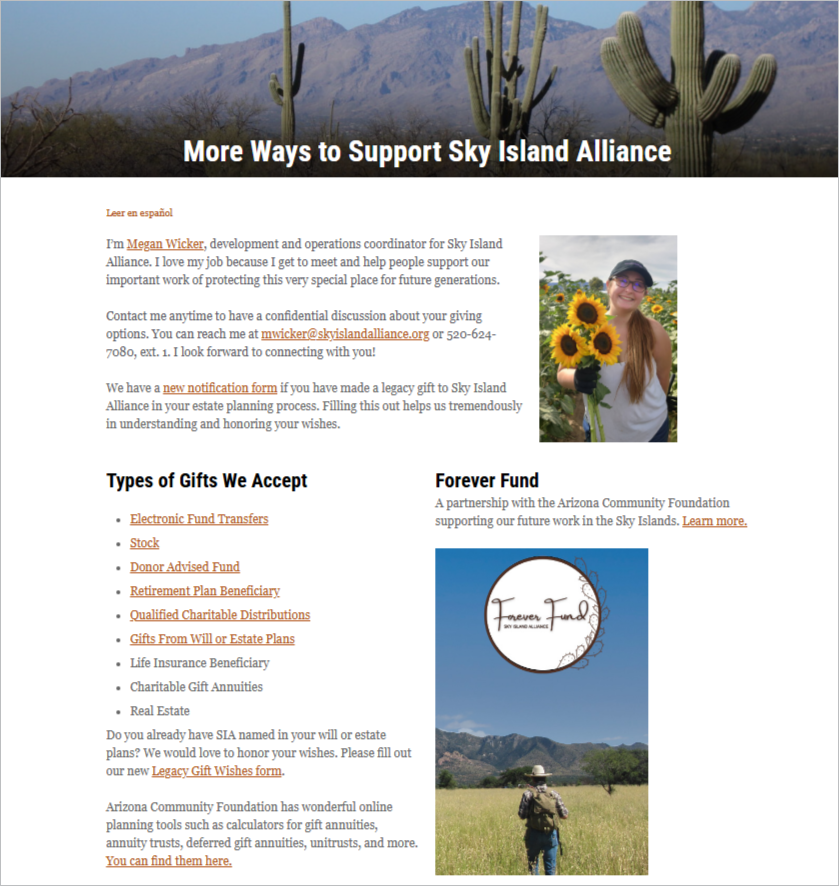
Most nonprofits have an Other Ways to Give page on their website. But some only mention bequests, while an others are an endless scroll of options with no clear priorities.
I like this compact one from Sky Island Alliance. The donor can contact a real person about giving, browse a curated list of the types of gifts SIA prefers (they accept others, but don’t list them all), and get easy access to the organization’s Tax ID.
What’s more, SIA gets ahead of any objections the donor might have about giving in larger amounts. They do this by listing their great-looking annual report, audited financial statements, and charity watchdog rankings
2. Embeddable Widget
Are you excited about gifts from donor advised funds? I am, because DAFs are the fastest-growing philanthropic vehicle in the United States. They contain billions of dollars that are earmarked for nonprofits and represent more than a quarter of individual giving!
Donors make contributions to their DAF accounts, which are managed by a sponsor. Sponsors are charitable arms of investment firms, community foundations, or single-issue charities.
Setting up a DAF is easy for donors, and they get an immediate tax deduction and timely, compliant gift acknowledgements from the sponsor. Plus, donors know any nonprofit they recommend receive a grant will be vetted by their DAF sponsor.
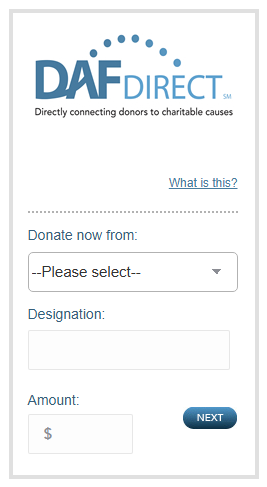
When NourishPHX got a call from a would-be DAF donor, they researched free widgets and installed this one on their donate page. DAFwidget is another free service.
3. Impact Report
When DAF gifts began to come in, NourishPHX was also quick to feature a pair of these donors in their impact report. The couple give monthly through their DAF, so it’s not a planned gift yet. But the financial mechanism already exists for a planned gift in the future.
With a DAF, the conversation shifts from the broad, “Would you consider a planned gift in the future?” to the specific, “Would you name us as a beneficiary of your DAF account?”

4. Newsletter
I have a confession to make. As a nonprofit communications director, I hated newsletters. Because just as you wrap one newsletter up, it’s time to start the next one.
But you know who loves newsletters? The average 65-year-old donor … especially when newsletters focus not on the nonprofit, but on how the donor makes a meaningful difference with their giving. That’s a critical shift in thinking.
Once you’ve done that, you can dedicate a small section of the newsletter to calls to action.
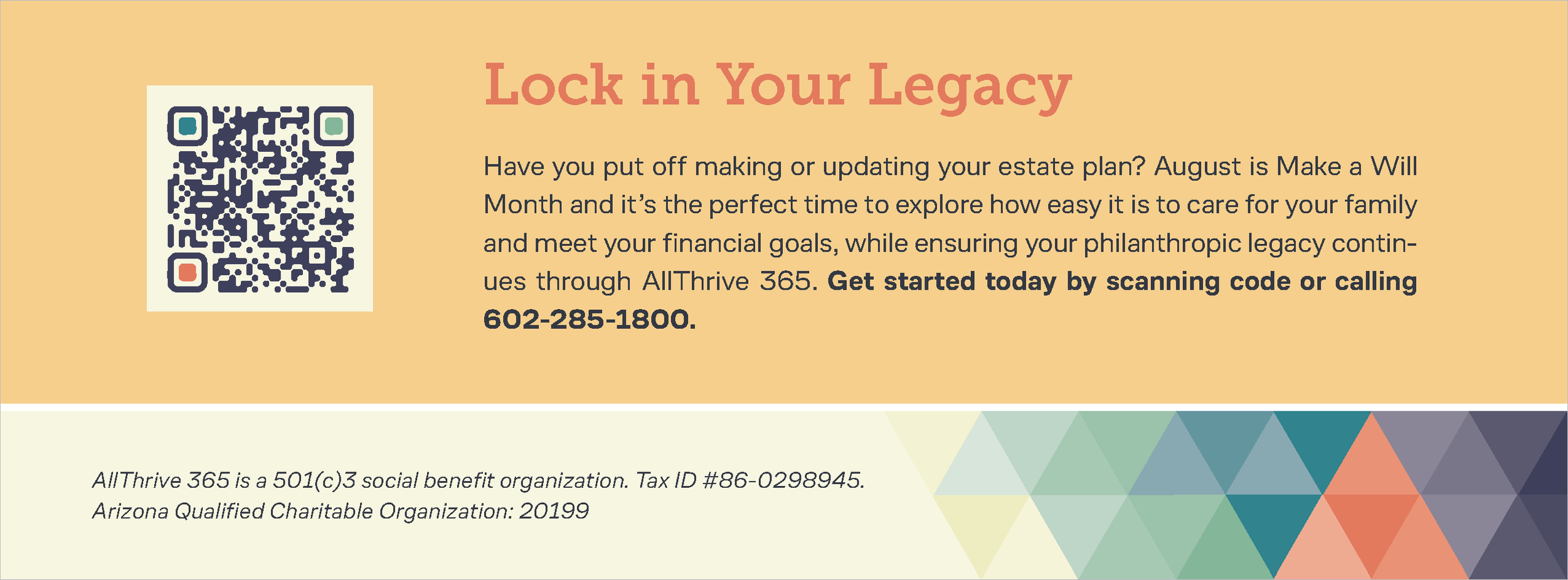
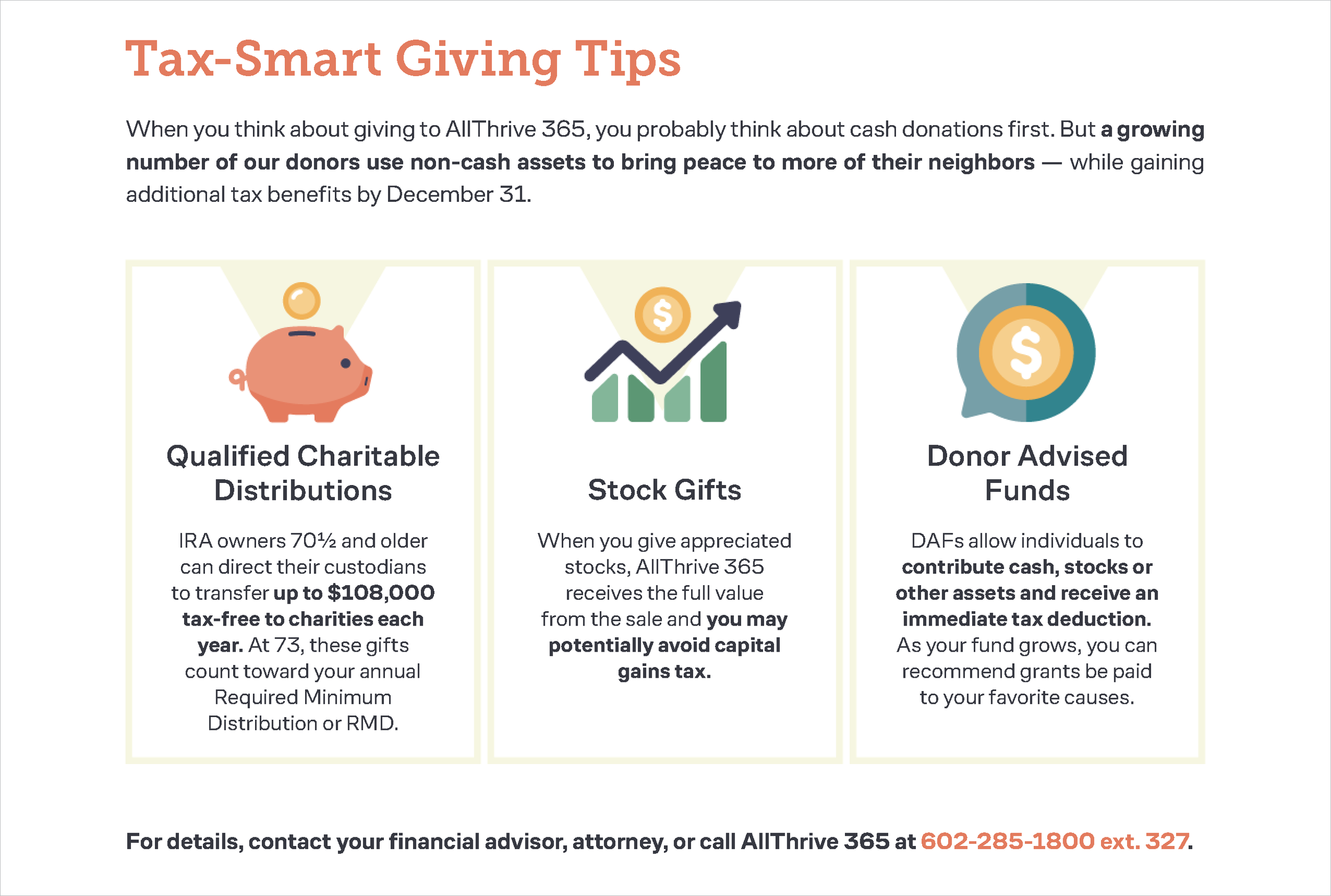
AllThrive 365 sends a print newsletter each quarter, along with an email that links to a digital version of the newsletter. That frequency allows our teams to cycle through all of AllThrive 365’s planned giving opportunities throughout the year.
5. Appeal Letter
If you have at least a quarterly ask-thank-report cycle of communications to donors, then you can dedicate at least one of your fundraising letters to planned giving.
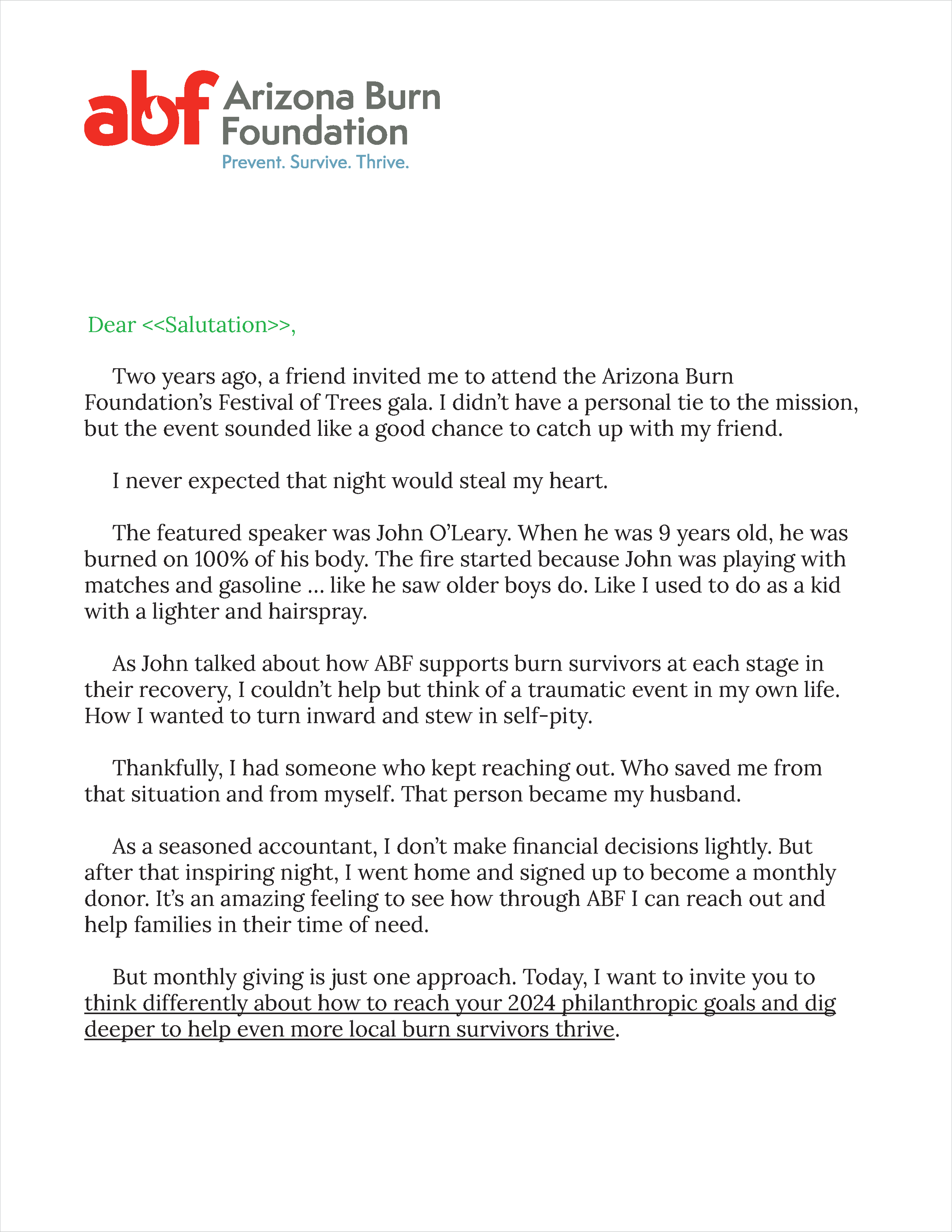
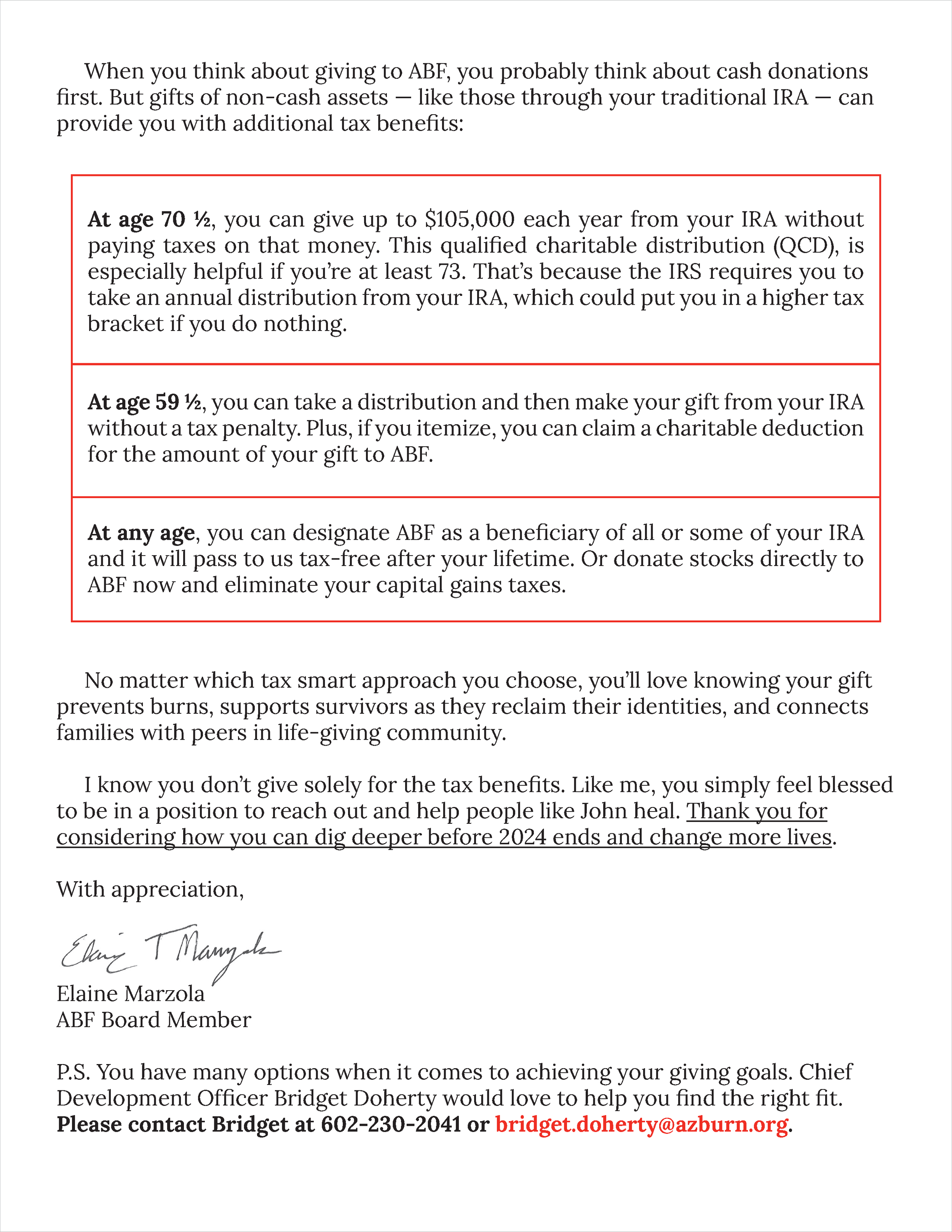
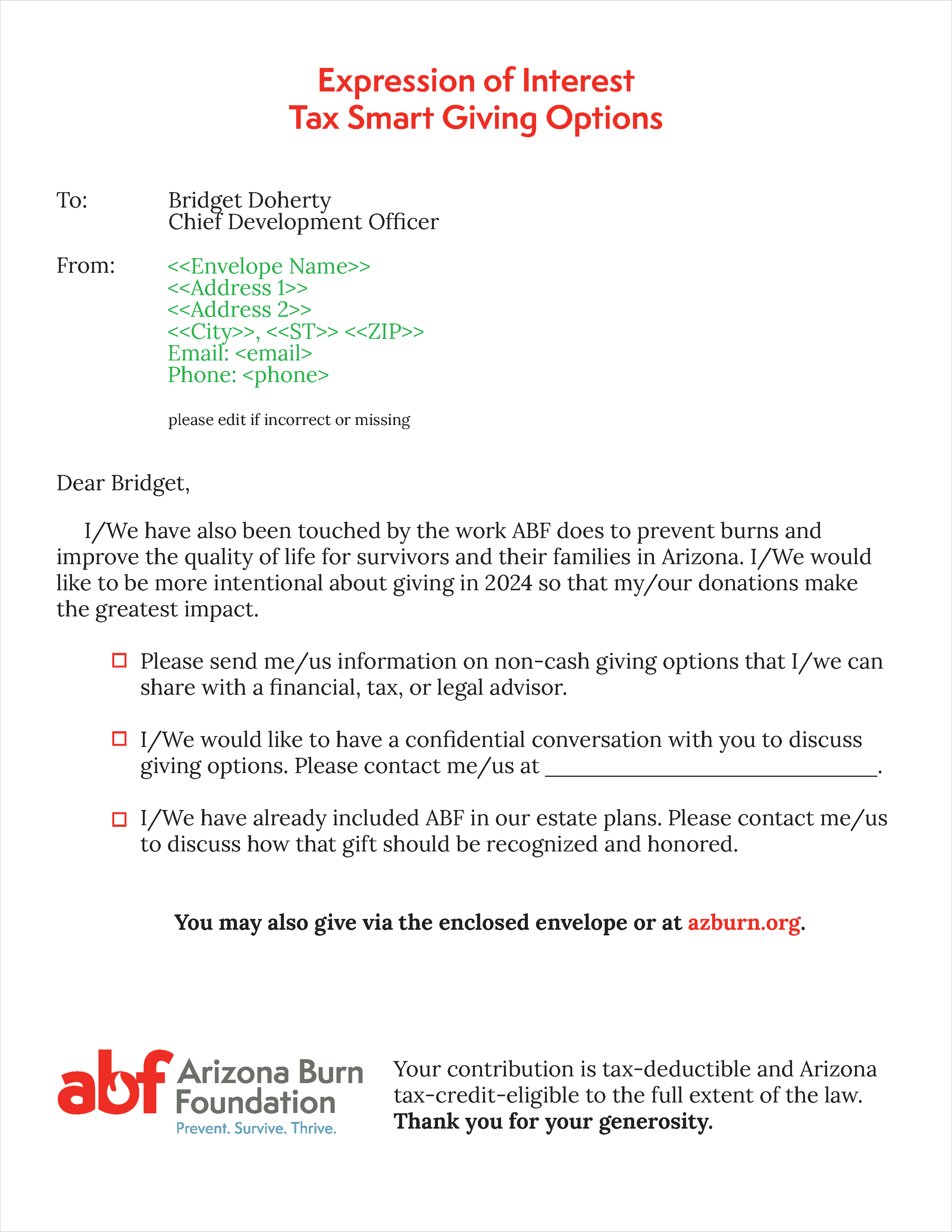
That’s what the Arizona Burn Foundation did. We helped them create a premium appeal that asked a subset of their donors for qualified charitable distributions and stock gifts.
A premium appeal typically includes these features:
8.5” x 11” letter with heavier paper stock than a basic appeal
Nested design that prints on only one side of the paper
Elevated language and design
Precancelled or first-class stamp
A separate reply page instead of a small reply slip attached to the letter
6. Reply Slip Back
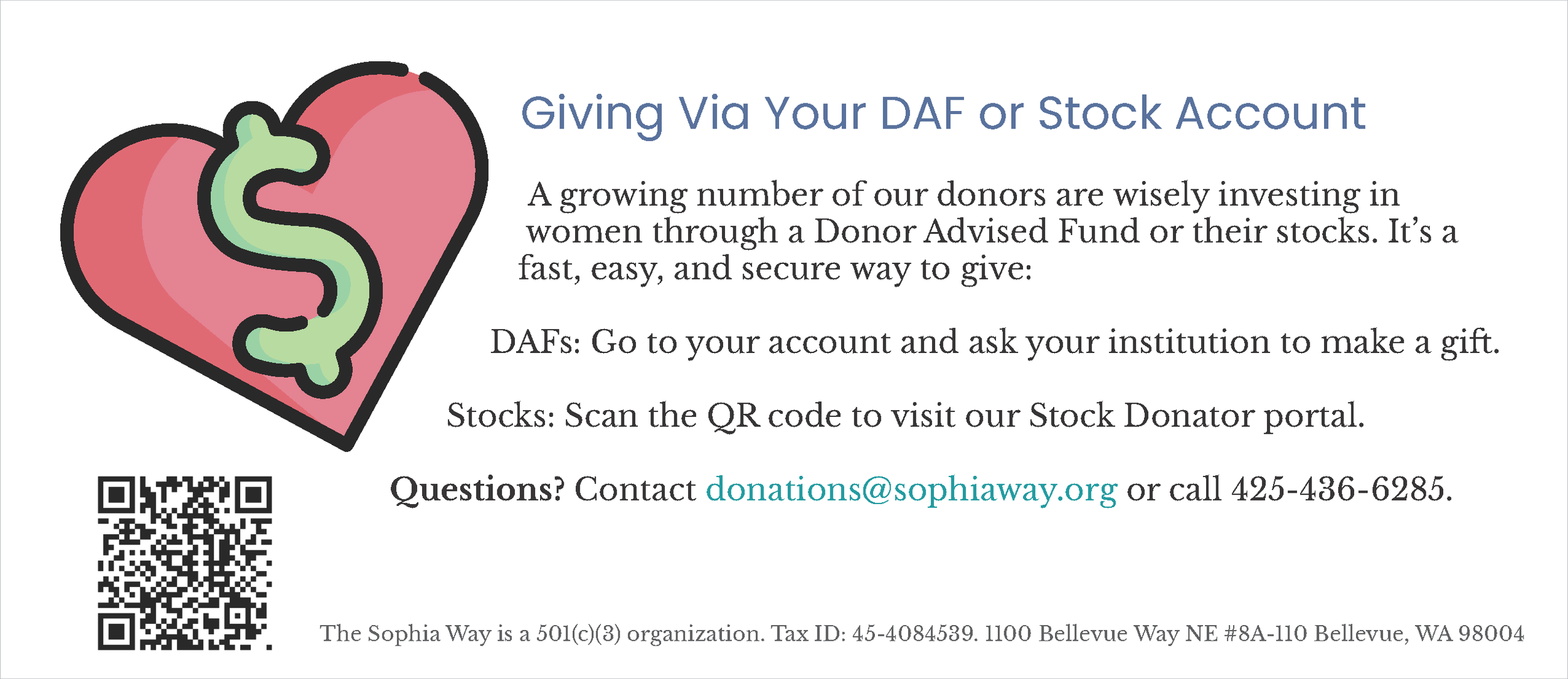
In one of Abeja’s basic 8.5” x 14” appeal letter packages, there’s room on the back of the reply slip for an additional message. Some of our clients have used this area to promote planned gifts.
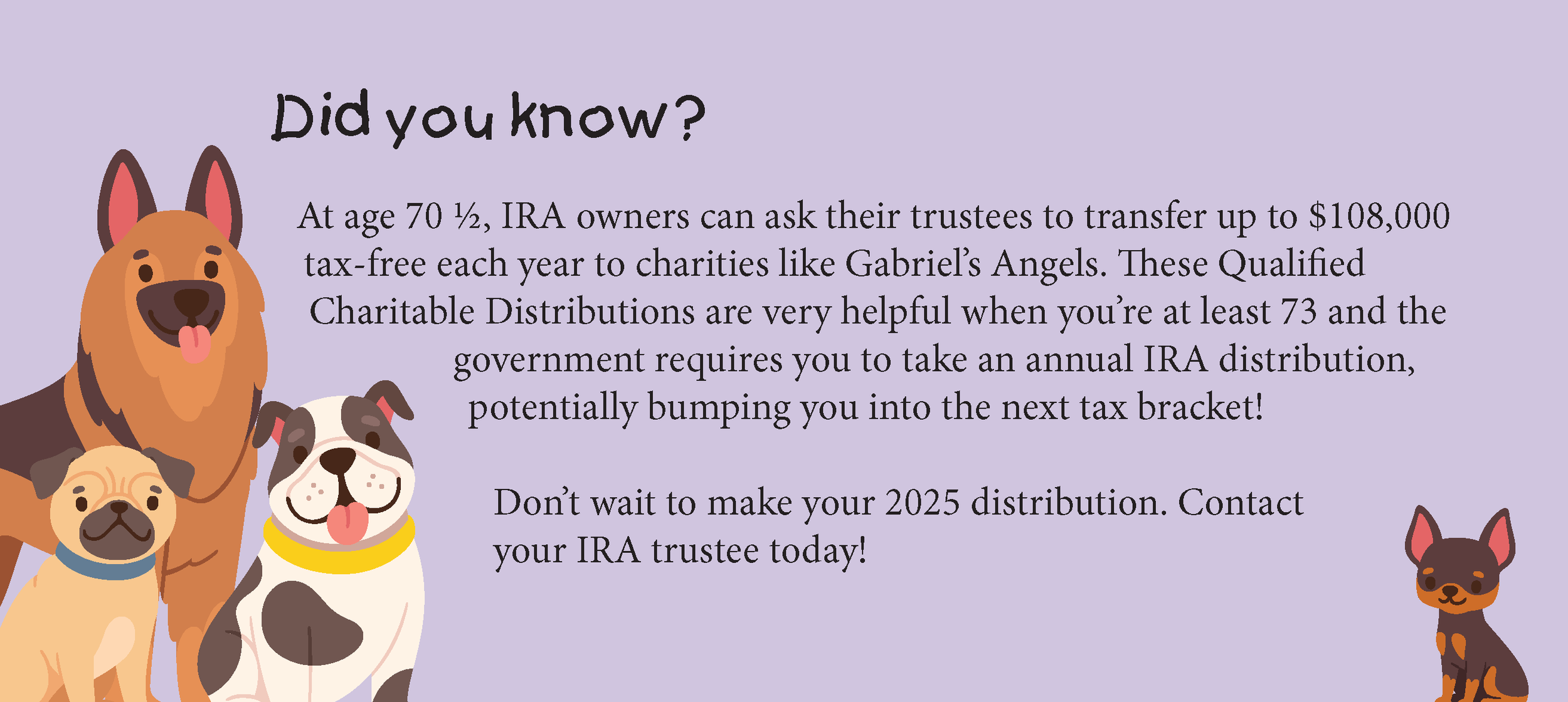
7. Buckslip
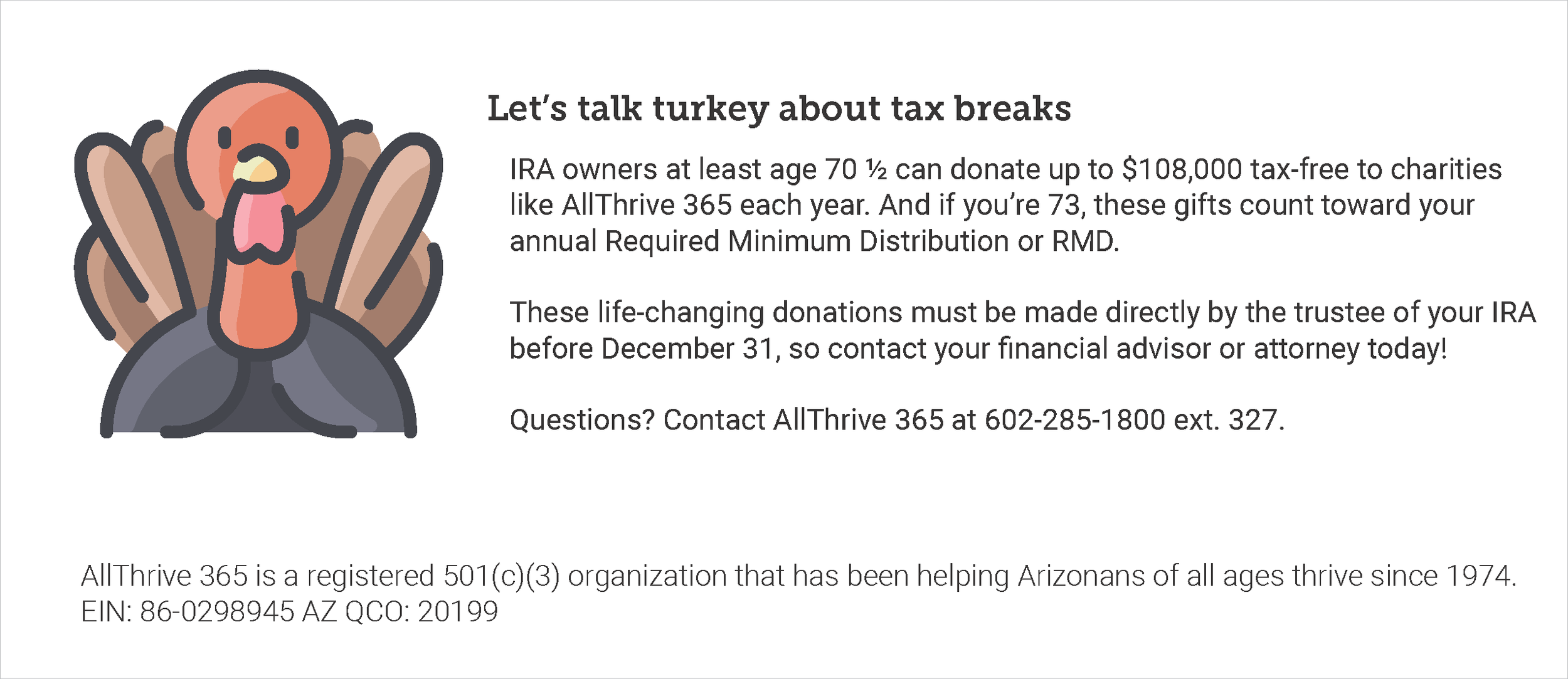
When our clients want their planned giving opportunities to stand out even more, they insert a buckslip in their letter packages. A buckslip is just what it sounds like: an unfolded sheet of paper typically measuring 3.5” x 8.6” — about the size of a dollar bill.
You might think of it as a mini-flyer that a donor can put up on their refrigerator as a reminder or near the desk where they keep their checkbook.
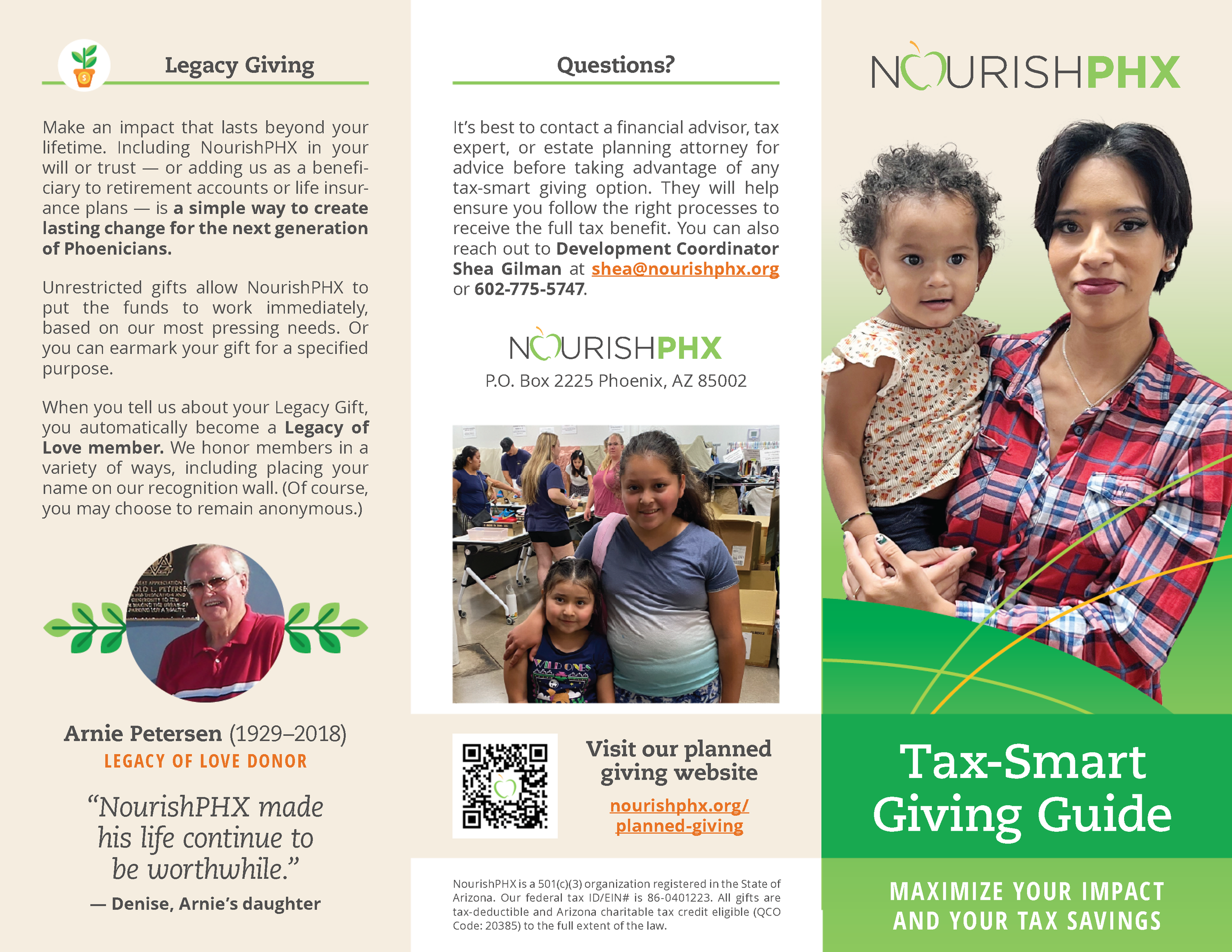
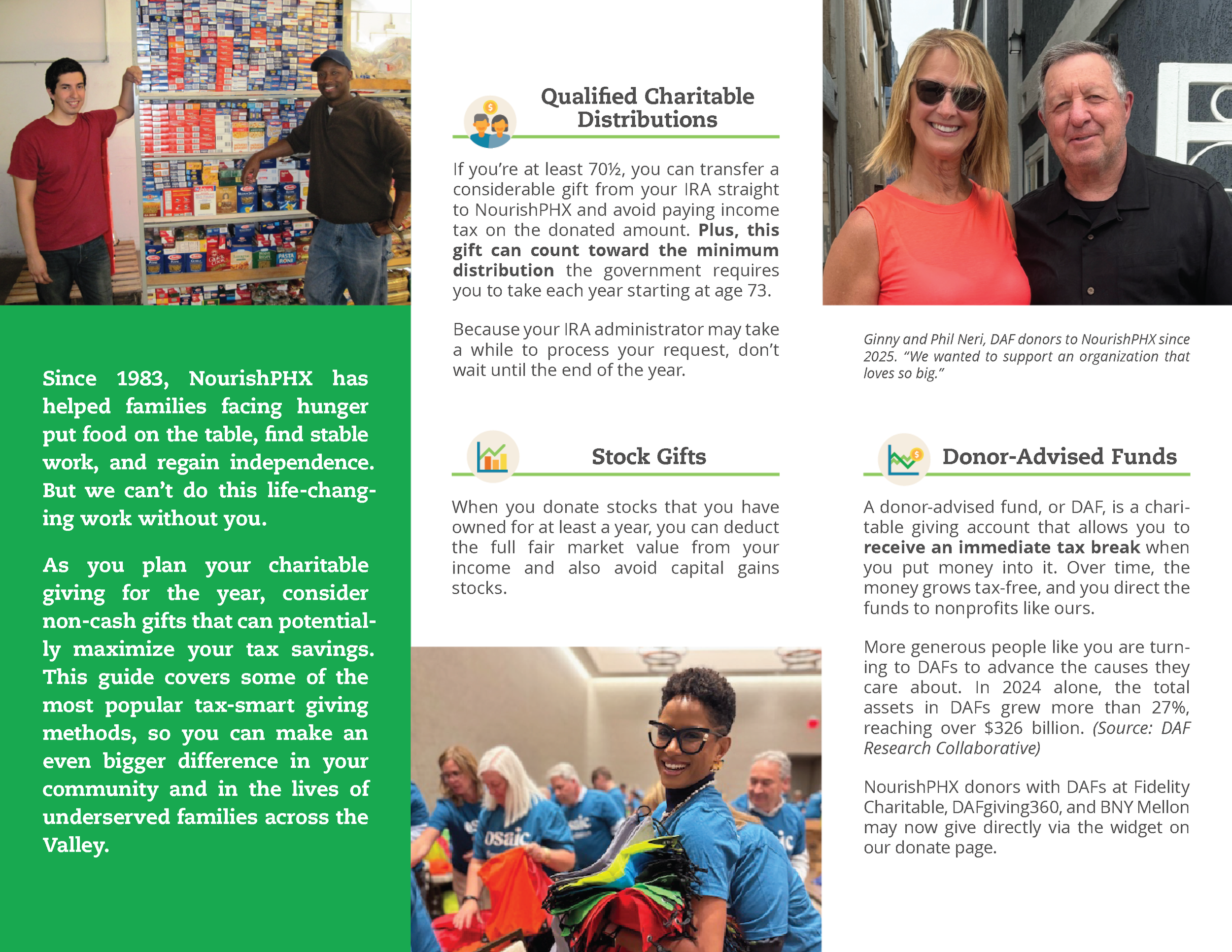
8. Giving Guide Brochure
Finally, most nonprofits have plenty of places where they could use a planned giving brochure. Here are a few ideas:
Major donor meetings
Volunteer orientation / check-in
Part of the place setting at a gala
Community events
CPA / financial planner offices
Inserted in a printed appeal
The Bottom Line
Please don’t let any more of this year go by without promoting planned gifts to your donors.
Remember, the vast majority of these gifts can be given during someone’s lifetime. And a small gift from an IRA or stock account today — if you steward the donor properly — can lead to a large bequest that can sustain your mission well into the future.